Warmup Services Harm Your Deliverability
Validity's Heatwave list flags domains warmed with fake engagement. Here's how to check yours.
We've written before about whether you need a warmup service. The short answer was "no." As Jp Valery said:
If you rely on automation to simulate interest, inbox systems eventually detect that pattern. When that happens, filtering tightens, reputation declines, and the domain becomes harder to recover.
There is a new tool that is actively trying to detect simulated warming. Validity recently launched Heatwave, a blocklist that identifies domains that have been warmed through synthetic engagement.
Heatwave is one more reason you should avoid using warmup services.
What is Heatwave?
Validity scores domains using signals from its Intelligence Network. Domains that cross a threshold for synthetic warming are automatically added to the list.
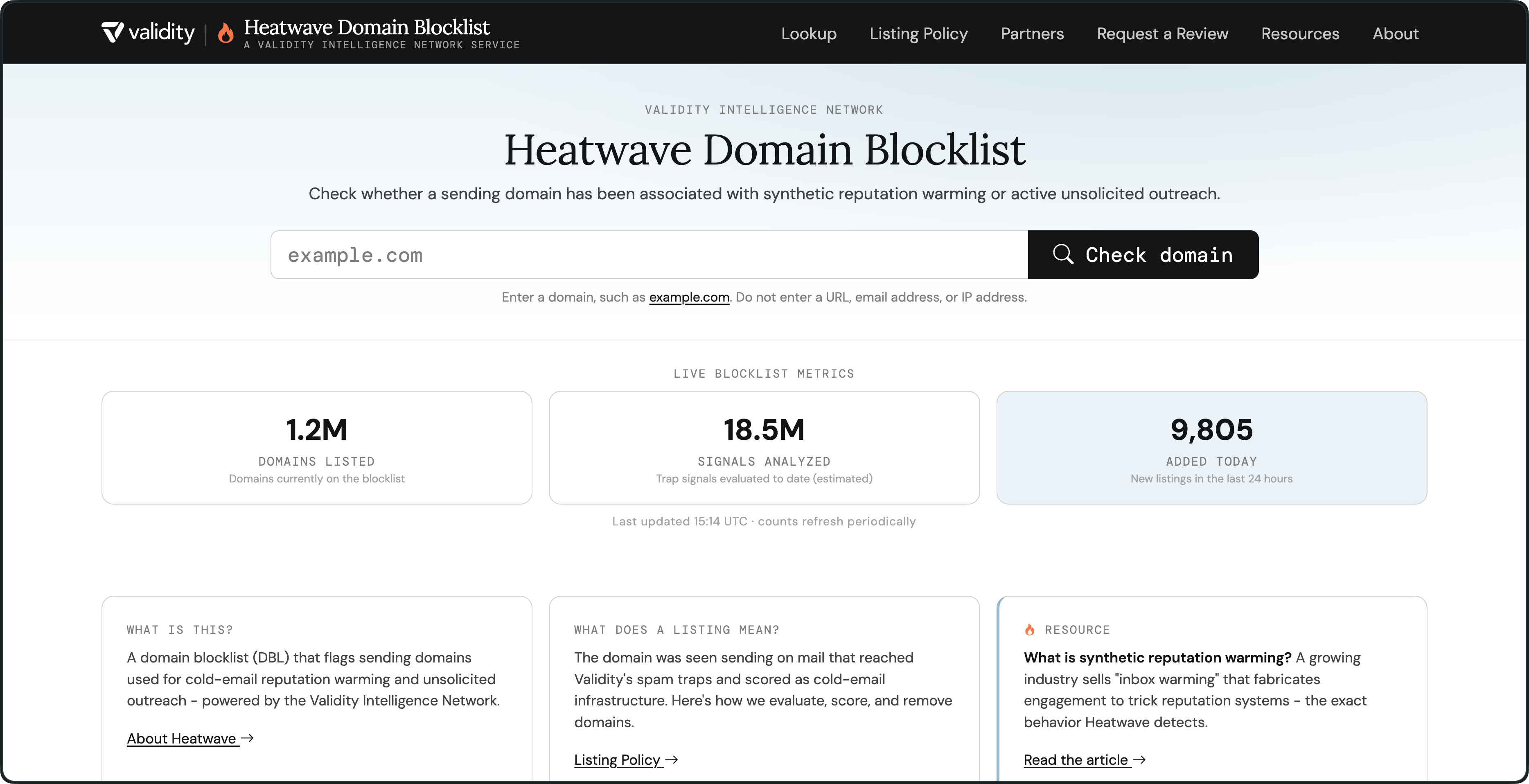
It has already listed more than 1.2 million domains. This signal is then shared with mailbox providers and security vendors, including Comcast, Proofpoint, Spamhaus, and SURBL.
Landing your domain on this list could damage its reputation with these providers, making it harder for your emails to reach your users' inbox.
You may be affected without knowing
Warmup activity often runs through agencies or outbound vendors, not your own team. Some register lookalike domains and warm them under your brand. Even if you've never signed up for a warmup service, someone acting on your behalf may have.
How to check your domain
Search your domain at lookup.validity.tools. The results can include related domains you didn't know existed.
Once your domain crosses Heatwave's threshold, its position on the blocklist is permanent. Heatwave also has a secondary classification for domains that are actively sending cold outreach. That status can be removed once the outreach stops, but the warming listing stays.
If your domain is listed, follow Validity's policy for what to do next. If you believe your domain was listed incorrectly, you can request a review.
What actually works
Legitimate senders do not need a warmup service.
- Verify your domain
- Get proper consent
- Increase volume gradually (see our warmup calculator).
Your domain warms itself through real engagement.
If you're not sure where to start, follow our guide on how to warm up your domain. If you need help, get in contact with our team.

How to Warm Up a New Domain
Learn how to warm up a domain to avoid deliverability issues.
resend.com/docs/knowledge-base/warming-up
Previously, we said a domain caught faking engagement becomes harder to recover. With Heatwave's permanent record, it may never recover at all.
Building reputation through real engagement takes longer, but it's the only way to reliably reach the inbox. There is no shortcut to trust.